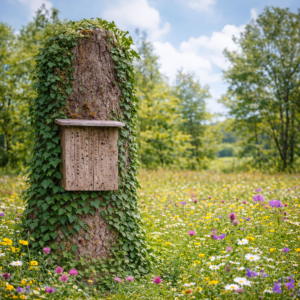
A nesting place and shelter for comfort!
In this insect hotel, many useful insects find a home. Bees, butterflies, and beetles use the various niches for nesting and overwintering. These little helpers are important for plant pollination and the health of our ecosystem. Take a close look – you might spot some guests!
An insect hotel provides accommodation and nesting opportunities for many wild bees, mud-dauber wasps, and other solitary wasps. Wild bees play a significant role in the natural balance. They are active even when honeybees are still inactive due to the cold. Wild bees do not produce honey, but they are highly important for pollinating wild and cultivated plants. Some flowering plants are only pollinated by them. Unlike honeybees, which live in colonies, wild bees usually live alone (solitarily).
The most effective protection for these animals is promoting a diverse wild flora. Without pollen and nectar for their offspring, they cannot survive. About 560 species of wild bees ensure the pollination of our flowering plants from spring to autumn.
Most wild bee species—about 75%—nest in the soil. They require porous open spaces, sand, and poor soils. Wild bees that lay their brood in cavities depend on deadwood and pithy stems.
To build an insect hotel, untreated hardwood, cleanly sawn bamboo tubes, cavity and rafter bricks, and boxes filled with clay or loess with cleanly pre-drilled holes of various diameters are needed. Each species selects the holes that match their size for nesting. However, large insect hotels can make it easier for pests to destroy the brood. The concentration of many nesting sites in a small area can pose a danger to emerging generations. In nature, wild bees usually use the feeding tunnels of beetles, which are often scattered over a large area, making them less likely to be found by pests.