
Home for many!
The living hedge is a special kind of hedge with branches. It´s a safe space for lots of species and provides food for them such as bugs, birds and small mammals. The living hedge also helps protecting the ground and promoting biodiversity. Have a look at all kinds of plants and animals living here!
Insects, amphibians, reptiles, spiders, birds, bats, hedgehogs, dormouse and many other animals benefit from deadwood. In general thicker wood is an even better habitat and offers more food. Deadwood structures illuminated by sunlight and standing deadwood are particularly rich in species. In summer, numerous insects can be found here, such as the blue carpenter bee, as well as lizards and other heat-loving species.
Deadwood not only provides a habitat during the warm summer months, but in winter, it also serves as a protected retreat for many animals. Here, creatures like hedgehogs, toads, and some insects can safely overwinter, whether in the branch structures on the ground, in beetle holes, or under the bark. Unfortunately, this habitat is becoming increasingly rare as gardens and parks are being tidied up more and more. Anyone who wants to help preserve a variety of species, such as hedgehogs, brimstone butterflies, lacewings, toads, lizards, birds, or ladybugs, in their garden should create a deadwood pile.
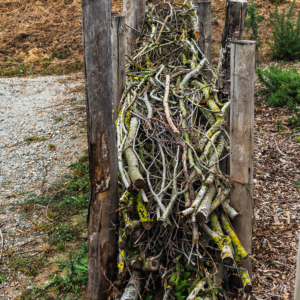
Deadwood in the form of a hedge
A Benjes hedge consists of two rows of wooden posts, between which deadwood, twigs, and other garden waste are stacked to form a hedge. Sturdy branches or wooden posts are alternately inserted into the ground, with the deadwood placed vertically. Over time, the hedge settles, and birds bring seeds, causing the hedge to come to life and plants to grow. Fresh cuttings can be added each autumn and spring. This creates a biodiverse habitat in the garden while saving work.